Overview
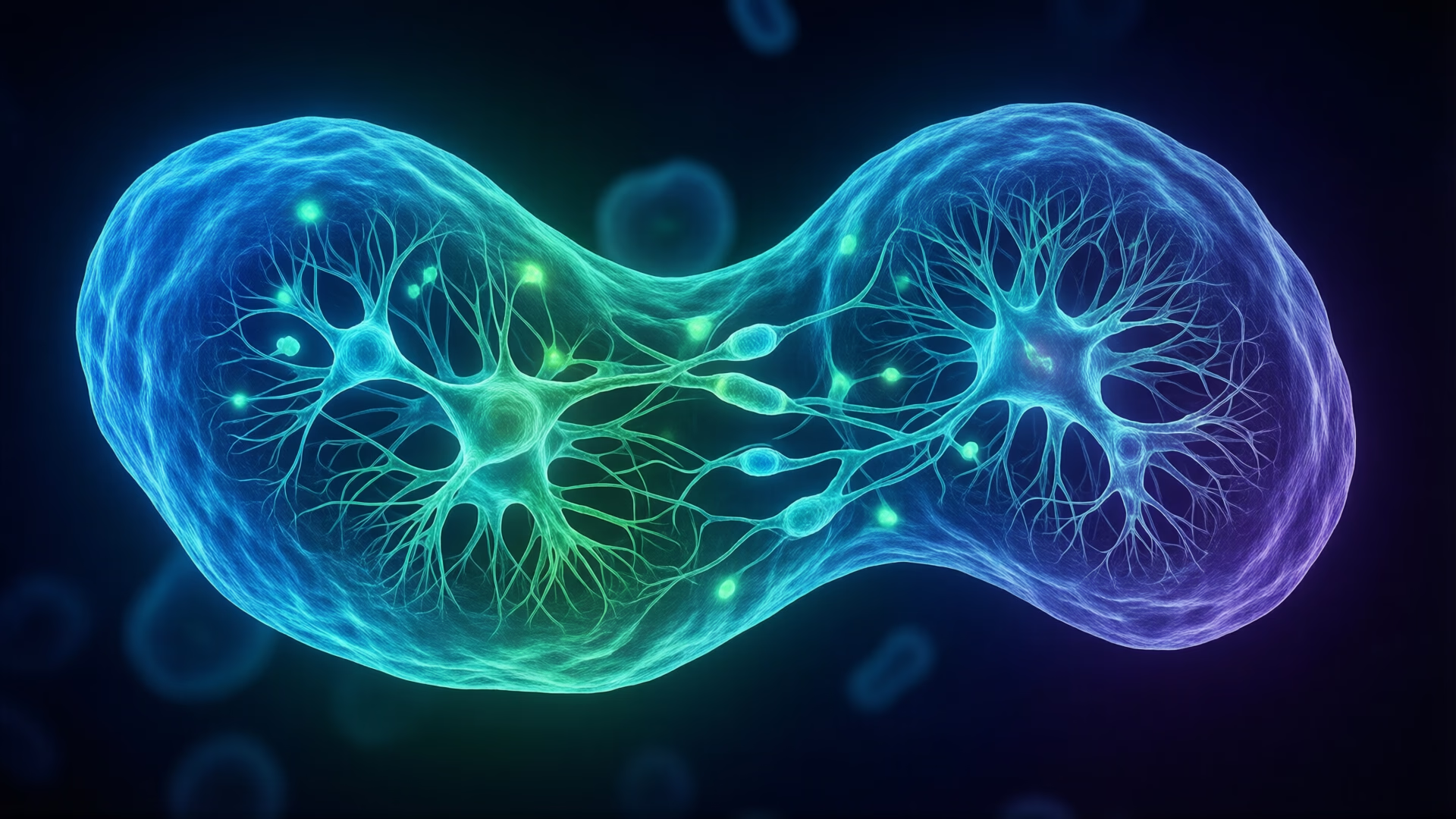
Apoptosis is a biological process of programmed cell death that occurs naturally in multicellular organisms. It involves the intentional destruction of cells for the benefit of the entire organism. Unlike necrosis, which results from external trauma or deprivation, apoptosis is a controlled and orderly process.
Key Concepts
- Programmed Cell Death: Apoptosis is often referred to as "programmed" cell death because it follows a specific sequence of molecular events.
- Benefits: It plays a crucial role in eliminating dangerous or non-functional cells, such as those with damaged DNA that could lead to cancer. It also contributes to the refinement of neural connections during nervous system development and the formation of distinct body parts during embryogenesis.
Key Mechanisms
Caspases are a family of proteolytic enzymes central to apoptosis. They cleave proteins involved in survival and repair processes. Inhibitor of Apoptosis Proteins (IAPs) regulate apoptosis by modulating caspase activity. Mitochondrial Control involves BCL-2 family proteins determining cytochrome c release, triggering caspase activation.
Types of Apoptosis Pathways
Extrinsic Pathway
- Triggered by external signals, such as FAS (Fas ligand) or TRAIL molecules binding to receptors (FASR and TRAILR) on the cell membrane.
- Activates FADD (Fas-associated death domain), leading to the activation of caspases-8 and -10, which initiate the cell death process.
Intrinsic Pathway
- Initiated by internal stressors like DNA damage or oxygen deprivation.
- Activates BH3-only proteins, which trigger BAX and BAK, leading to mitochondrial outer membrane permeability (MOMP).
- Cytochrome C release from mitochondria forms the apoptosome, activating caspase-9 and subsequently caspases-3 and -7.
Notch-Delta Signaling Pathway
The Notch-Delta pathway induces permanent cellular identity changes and is significant in processes like differentiation and apoptosis, emphasizing irreversible signals in cell fate determination.
Signaling Cascades
Signaling cascades are sequences of molecular events that propagate extracellular signals within a cell, leading to various outcomes such as growth, differentiation, or apoptosis. These cascades can result in either fast or slow cellular responses.
Fast vs Slow Responses
Fast responses occur rapidly and involve modifications of preexisting proteins without new protein synthesis. Apoptosis is a slow response because it necessitates gene expression changes to initiate cell death.
Integration and Feedback Mechanisms
Cell signaling involves integrating multiple inputs with feedback loops to regulate activity. Positive feedback amplifies signals, while negative feedback prevents overactivation. In apoptosis, these mechanisms ensure balanced survival and death signals.
When Does Apoptosis Occur?
Cells undergo apoptosis when they are damaged, stressed, or no longer needed by the organism. Examples include DNA damage, oxygen deprivation, and changes in cell functionality during development or environmental shifts.
Clinical Relevance
Apoptosis contributes significantly to neurodegenerative processes in glaucoma and ALS. ER stress and subsequent activation of apoptotic pathways are key factors in the degeneration of retinal ganglion cells (RGCs). Insights into these mechanisms highlight potential therapeutic strategies aimed at mitigating apoptosis.
Therapeutic Approaches
- Sigma-1 Receptor Modulation: Enhancing sigma-1 receptor activity may protect against ER stress-induced apoptosis.
- Histamine H1 Inhibition: By restoring ER homeostasis, inhibiting histamine receptors can prevent neurodegeneration and apoptosis in RGCs.
Relevance in Health
Apoptosis is vital in DNA damage response to maintain genomic integrity. In cancer therapy, it's targeted for treatment. Organ-specific roles ensure tissue homeostasis.
Role in Health
Apoptosis is a significant defense mechanism against cancer as it eliminates pre-cancerous cells before they can proliferate. Mutations that impair apoptosis are associated with increased cancer risk. It also contributes to processes like muscle atrophy and nervous system development by removing excess or damaged cells.
Examples of Apoptosis
- Frog Metamorphosis: In frog tadpoles, apoptosis causes the removal of gills, fins, and tails during metamorphosis, allowing the development of limbs.
- Human Nervous System Development: During human nervous system development, excess neurons undergo apoptosis to refine neural connections and optimize efficiency.
- Mouse Embryonic Foot Development: Apoptosis is used to create distinct toes by eliminating cells that connect them.
[1]: Apoptosis: Definition, Pathway, Examples and Quiz | Biology Dictionary [2]: 7.1: General Principles of Signaling - Biology LibreTexts [3]: 8 - Cell Death in Response to Genotoxic Stress and DNA Damage [4]: Endoplasmic reticulum stress: molecular mechanism and ... - Nature