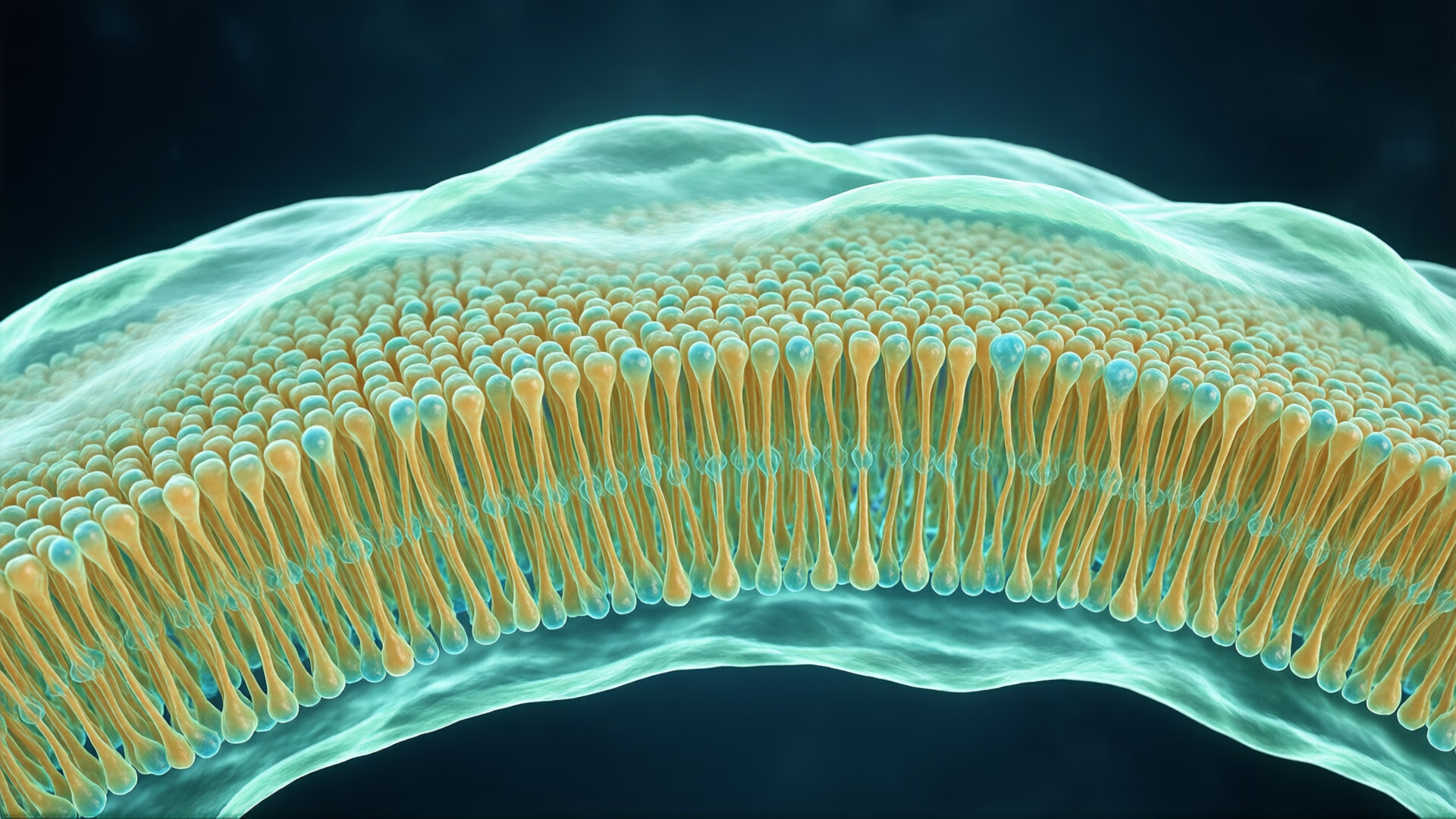
Cell Membrane
Overview
The cell membrane, also known as the plasmalemma or biological membrane, is a critical component of cells. It functions as a selectively permeable barrier that separates the internal cellular environment from the external surroundings. Composed primarily of lipids, proteins, and carbohydrates, it plays essential roles in protecting cellular components, facilitating transport of molecules, and aiding in cell recognition and communication.
History
The term "cell membrane" was first introduced by Nageli and Cramer in 1855. Over time, several models were proposed to explain its structure. The sandwich model (lamellar model) was introduced by James Danielli and Hugh Davson in 1935, describing the membrane as a stable structure with alternating layers of lipids and proteins. However, this model was later replaced by the fluid mosaic model, developed by Singer and Nicolson in 1972, which provides a more dynamic and accurate depiction of the cell membrane's structure.
Structure
The structure of the cell membrane is best understood through two key models:
Sandwich Model (Lamellar Model)
- Proposed By: James Danielli and Hugh Davson (1935).
- Description: This model describes the plasma membrane as a stable, layered structure consisting of phospholipid and protein layers.
- Components:
- Phospholipid bilayers form the central layer, with polar hydrophilic heads facing outward and non-polar hydrophobic tails inward.
- Protein molecules are positioned on either side of this lipid core.
- Limitations: The model fails to account for the membrane's dynamic nature and transport mechanisms.
Fluid Mosaic Model
- Proposed By: Singer and Nicolson (1972).
- Description: This model views the cell membrane as a dynamic, fluid structure where proteins are embedded within or attached to a fluid phospholipid bilayer.
- Components:
- Phospholipids form the base of the membrane with hydrophilic heads facing outward and hydrophobic tails inward.
- Proteins are either integrated into the lipid bilayer (integral) or loosely associated with it (peripheral).
- Advantages: This model explains the membrane's flexibility, variability in composition, and its role in active transport.
Functions
The cell membrane performs several vital functions:
Protective Role
It maintains the integrity of the cell by preventing the influx of harmful substances and the loss of essential cellular components.
Cell Recognition and Communication
Glycolipids and glycoproteins on the membrane surface facilitate cell recognition, immune responses, and interactions with other cells or molecules.
Transport Mechanisms
- Active Transport: Utilizes energy to move ions and molecules against concentration gradients.
- Passive Transport: Includes processes like diffusion, osmosis, and filtration, allowing substances to move along concentration gradients.
- Endocytosis/Exocytosis: Facilitates the intake or expulsion of large molecules or particles.
Specialized Functions
Certain proteins embedded in the membrane enable specific functions such as enzyme activity, signal transduction, and ion channeling.
The cell membrane's structure and functions are essential for maintaining cellular homeostasis and enabling interactions with the external environment.
Medical Relevance
Alterations in the plasma membrane have been implicated in various diseases, including Alzheimer’s disease, where protein misfolding disrupts membrane function. Additionally, disruptions in membrane fluidity or permeability can lead to cellular dysfunction, impacting processes like nutrient uptake and signal transduction.
Cell Adhesion
Facilitates tissue formation and integrity via adhesion molecules like cadherins and selectins.
Membrane Microdomains (Rafts)
Specialized regions enriched with lipids and proteins, crucial for signaling and vesicle trafficking.
Intercellular Junctions
Structures such as tight junctions, gap junctions, and desmosomes rely on the cell membrane to maintain cellular cohesion.
Vesicles
Membrane-bound organelles like lysosomes and endosomes perform critical roles in digestion, waste management, and signaling.
Therapeutic Implications
Targeting the cell membrane can disrupt metastatic processes or enhance immune responses against cancer cells.
Carbohydrates (Glycocalyx)
Attached as glyco groups to lipids or proteins, forming the glycocalyx, which aids in cell recognition, adhesion, and protection.
Signaling Mechanisms
Cell signaling is a critical function of the cell membrane, enabling cells to respond to external cues such as hormones, neurotransmitters, and other signaling molecules. These signals are transmitted through specific receptors located on or within the membrane.
Signal Transduction
The process begins with signaling molecules (such as hormones or neurotransmitters) binding to specific receptors on the cell membrane. This interaction initiates a cascade of events that convert the external signal into an internal cellular response.
[1]: Cell membrane: Structure and Function - Microbe Online [2]: Understanding the Endomembrane System: A Detailed Diagram Guide [3]: 4.10 Cellular Respiration - Human Biology [4]: 21.1 Signaling Molecules and Cellular Receptors