Overview
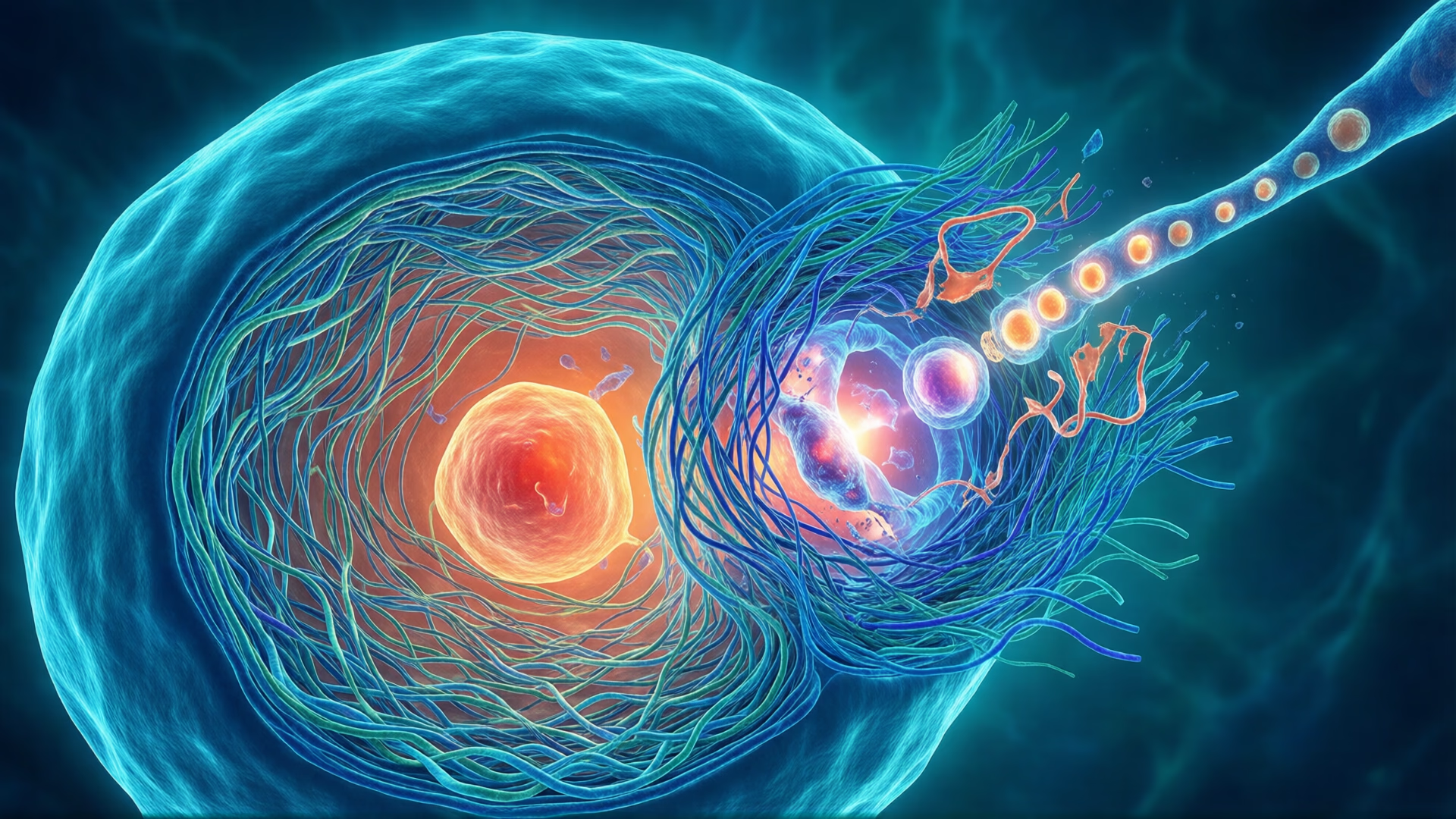
The cell nucleus is a defining feature of eukaryotic cells, serving as the central repository for most of the cell's genetic material (DNA) and playing a critical role in coordinating cellular activities such as protein synthesis, cell division, and gene expression. Its structure and components are essential for maintaining cellular organization and function.
Structure of the Nucleus
The nucleus is typically spherical or oblong, with a diameter ranging from 1 μm in yeast to 5-10 μm in multicellular organisms. It is surrounded by a double-membrane structure known as the nuclear envelope, which separates the nucleus from the cytoplasm and regulates the transport of molecules into and out of the nucleus.
Components of the Nucleus
Nuclear Envelope
The nuclear envelope consists of inner and outer membranes, both composed of phospholipid bilayers with embedded proteins. The space between these membranes (nuclear periplasm) is about 20-40 nm wide.
Inner Nuclear Membrane
This membrane is attached to lamins, intermediate filament proteins that form the nuclear lamina. The lamina provides structural support and helps organize chromatin.
Outer Nuclear Membrane
Continuous with the endoplasmic reticulum (ER), this membrane has ribosomes attached to it, facilitating protein synthesis near the nucleus.
Nuclear Pores
These are tiny holes (diameter ~100 nm) in the nuclear envelope, lined by the nuclear pore complex. They regulate the transport of molecules between the nucleus and cytoplasm.
Structure and Function
The nuclear envelope is composed of integral membrane proteins that form a barrier separating the nucleoplasm from the cytoplasm. These proteins disperse throughout the endoplasmic reticulum during mitosis, facilitating nuclear envelope breakdown. The nuclear pore complex, mediated by RanGTP, plays a role in regulating the movement of molecules between the nucleus and cytoplasm.
Dynamics During Mitosis
The nuclear envelope undergoes breakdown at the onset of mitosis, enabling access to genetic material for replication and segregation. This process involves the dispersion of integral membrane proteins into the endoplasmic reticulum and the disorganization of cortical microtubules.
Role of RanGTP
RanGTP is essential for precursor vesicle recruitment and fusion during nuclear envelope assembly. It mediates the formation of the nuclear pore complex, ensuring proper reformation of the nuclear envelope post-mitosis.
Actin Microfilaments and Microtubules
Actin microfilaments are critical for maintaining cortical microtubule organization. Their disruption leads to disorganization and the formation of extra phragmoplasts at the M/G1 interface, highlighting their role in plant cell division.
Vesicles and Kinesin-like Proteins
Vesicles target membranes and nuclear pore complexes during nuclear envelope assembly. Kinesin-like proteins are involved in transport and structural rearrangements necessary for mitotic processes.
Significance
The dynamics of the nuclear envelope during mitosis are vital for successful cell division. Understanding these processes provides insights into cellular mechanisms, particularly in plants where open mitosis is a key feature.
Chromatin and DNA Organization
DNA is organized into chromosomes, each consisting of a long DNA molecule associated with histone proteins to form nucleosomes. When not dividing, chromatin is less visible under a microscope but becomes compact during mitosis (e.g., metaphase). Human cells typically have 46 chromosomes, while gamete cells have 23.
Nucleolus
The nucleolus is the site of ribosomal RNA (rRNA) production and ribosome subunit assembly. It lacks a membrane and has unique density. Abnormalities in the nucleolus are linked to degenerative diseases like Huntington’s and Alzheimer’s.
Nucleoplasm
This semi-liquid protoplasm fills the nucleus, containing proteins, enzymes, and various nuclear bodies such as Cajal bodies, Gemini bodies (Gems), and Polycomb bodies.
Clinical Notes on Laminopathies
Mutations in genes coding for lamins can cause laminopathies, a group of rare genetic disorders. Examples include Emery-Dreifuss muscular dystrophy and Dunnigan-type familial partial lipodystrophy. These mutations affect the nuclear envelope and lamina, leading to developmental and aging-related disorders.
Nucleus Abnormalities
Abnormal nucleus structure or shape can indicate certain blood disorders. For example, Wilson’s disease causes increased glycogen in nuclei, while acute myeloid leukaemia results in cup-shaped nuclei. Changes in the nuclear envelope are associated with cardiomyopathy and muscular dystrophy.
Nucleolus Abnormalities
Abnormalities in nucleoli have been linked to rare hereditary diseases and degenerative conditions like Huntington’s disease and Alzheimer’s disease.
Key Concepts
- Lamin-Associated Membrane (LEM) proteins: Involved in chromatin organization and gene regulation. - Nuclear Pore Complex (NPC): Facilitates transport and contributes to transcriptional control. - Lamina-Associated Domains (LADs): Heterochromatin regions near the nuclear periphery regulating gene expression.
Role in Cell Differentiation
The nuclear envelope interacts with transcription factors and epigenetic modifications to regulate gene expression during cell differentiation. Mutations or disruptions can impair this process, leading to developmental disorders.
Mechanobiology
The nuclear lamina is mechanosensitive, responding to external forces and influencing differentiation outcomes under mechanical stress.
Advances and Disease Relevance
Recent advances in nuclear mechanics have provided insights into how alterations in nuclear structure and function contribute to various diseases, including cancer and cardiovascular disorders. The review underscores the importance of understanding these mechanics for developing therapeutic strategies targeting nuclear dysfunction.
History
The study of nuclear mechanics has gained significant attention in recent years, particularly with advancements in experimental techniques and computational modeling. The review article highlights the evolution of methodologies used to study nuclear mechanics, emphasizing the integration of artificial intelligence (AI) in modern research approaches.
Mechanical Characterization
Nuclear mechanics involves understanding the physical properties of the nucleus, such as its elasticity and ability to resist deformation. These mechanical characteristics are essential for maintaining the structural integrity of the nucleus and facilitating various cellular processes.
Methodologies
The review outlines methodologies employed in nuclear mechanics studies, including advanced imaging techniques, computational simulations, and biomechanical assays. These approaches allow researchers to quantify nuclear stiffness and other mechanical properties under varying conditions.
Artificial Intelligence (AI) Applications
AI has emerged as a powerful tool in nuclear mechanics research. Machine learning algorithms are used to analyze complex data from experiments, predict nuclear behavior, and identify patterns that might not be apparent through traditional methods.
[1]: Cell nucleus: Histology, structure and functions | Kenhub [2]: Open Mitosis: Nuclear Envelope Dynamics - Springer [3]: Nuclear envelope and chromatin choreography direct cellular ... [4]: A Comprehensive Review of Nuclear Mechanics: Advances ... - Springer