Overview
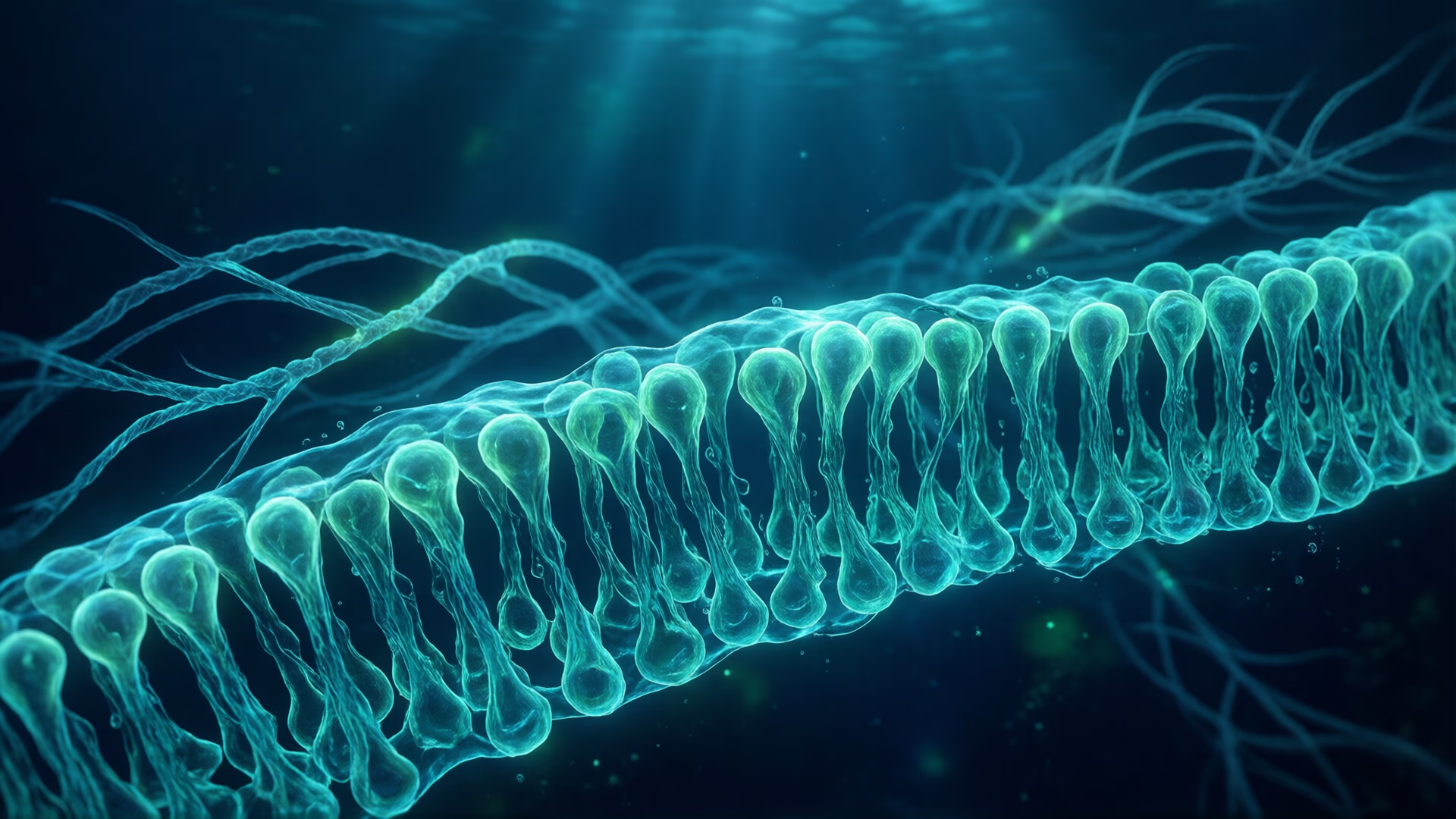
Cell signaling is a critical process that allows cells to communicate with their surroundings and other cells. This communication is facilitated by the cell membrane, which plays a central role in detecting and transmitting signals. The membrane's structure and composition enable it to perform these functions through specialized proteins and other components.
Cell Signaling
Types of Cell Signaling
Cell signaling can be categorized into two primary types:
- Direct Connection: This method involves one cell directly connecting to another, though it is relatively uncommon.
- Indirect Connection: In this more common type, signaling molecules are released and travel through space or body fluids before reaching their target cells.
The Role of ATP in Cell Signaling
Adenosine triphosphate (ATP) is central to various cellular processes, including signal transduction and calcium fluxes. In skin scaffolds, ATP-dependent processes maintain structural integrity and functionality.
Synaptic Signaling
Synaptic signaling occurs between neurons at the synapse, a junction connecting two nerve cells. This process involves the sending neuron releasing neurotransmitters into the synaptic gap. These neurotransmitters bind to receptors on the receiving cell, causing chemical changes such as ion channel opening and adjustments in membrane potential.
Dopamine Signaling
Dopamine serves as a neurotransmitter naturally produced in the body, associated with "feel good" sensations. It plays a significant role in regulating mood and behavior. Drugs can influence dopamine pathways by preventing its release or blocking receptor sites, thereby affecting neural signaling processes.
Hormones and Endocrine System
The endocrine system relies heavily on cell signaling for hormone function. Hormones act as signaling molecules, traveling through the bloodstream to regulate various bodily functions. This communication is vital for maintaining homeostasis and coordinating complex physiological responses.
Signal Reception and Transduction
The cell membrane facilitates the recognition of signaling molecules through receptor proteins. Once a signal is detected, it is transduced into intracellular responses, often involving changes in ion concentrations or activation of secondary messenger systems.
Key Concepts
Membrane Proteins
The cell membrane contains various types of proteins that are essential for signaling. These include:
- Receptors: Integral or peripheral membrane proteins that recognize and bind to signaling molecules (e.g., hormones, neurotransmitters).
- Ion Channels: Proteins that regulate the flow of ions across the membrane, often in response to signals.
- Transporters and Pumps: Proteins that actively transport molecules across the membrane, maintaining ion gradients.
Ion Channels and Pumps
Ion channels and pumps are integral to signaling processes. For example, ion channels can open or close in response to specific stimuli, leading to changes in membrane potential. This mechanism is crucial for processes like nerve signal transmission and muscle contraction.
Importance of Membrane Structure
The selective permeability of the cell membrane ensures that only specific molecules can pass through, maintaining cellular homeostasis and enabling precise signaling. The fluidity and stability of the membrane, influenced by components like phospholipids and cholesterol, are essential for its function in signaling.
Regulation of Cytoskeletal Dynamics
Cellular signaling pathways play a crucial role in regulating the dynamics of the cytoskeleton. These pathways control the assembly and disassembly of protein filaments such as microfilaments (actin), intermediate filaments, and microtubules. For example, actin monomers polymerize to form microfilaments, which can rapidly extend protrusions like pseudopodia, enabling cell movement in response to external signals.
Motor Protein Activity
The activity of motor proteins—such as myosin, kinesin, and dynein—is also regulated by cellular signaling. These proteins generate force by moving along cytoskeletal filaments, facilitating processes like intracellular transport. For instance, kinesin and dynein motors move cargo along microtubule tracks, while myosin powers processes such as muscle contraction and cytoplasmic streaming.
Conventional Protein Kinase C
Conventional Protein Kinase C is crucial for the morphological changes observed in rodent mast cells, indicating its importance in cellular adaptation and signaling processes.
Integrin Activation
Integrin activation involves a key step known as the headpiece hinge angle opening. This dynamic process provides insights into how integrins regulate cell adhesion and migration.
Talin-Vinculin Interaction
The interaction between Talin and Vinculin is essential for cell adhesion and migration. Stretching of single Talin rod molecules activates Vinculin binding, highlighting mechanical regulation in these processes.
Actin Stress Fibers
Different subtypes of actin stress fibers are present in mesenchymal-migrating cells. These structures influence cell movement by providing structural support during migration.
RhoA/ROCK/MLC Signaling Pathway
The RhoA/ROCK/MLC signaling pathway is inhibited by Honokiol, which reduces the migration of renal cell carcinoma cells. This pathway plays a role in regulating actin cytoskeleton dynamics and cell contractility.
Ezrin/Radixin/Moesin (ERM) Proteins and Flotillins
The ERM proteins—Ezrin, Radixin, and Moesin—along with Flotillins, play a significant role in promoting uropod formation in T cells. This process is essential for cell movement during immune responses.
Calcium Signaling in Skin Scaffolds
Calcium signaling modulates cellular behavior and tissue repair, influencing the mechanical properties of skin tissues and bioenergetic states.
Mechanical Properties of Skin Scaffolds
ATP-dependent processes regulate the mechanical properties of scaffolds by controlling cell contraction and structural integrity under stress.
Metabolic Aspects in Skin Scaffolds
ATP influences metabolic regulation and matrix remodeling, shaping the mechanical properties of scaffolds to mimic native skin functionality.
Tissue Repair and Regeneration
Cell signaling pathways orchestrate tissue repair, including cell migration and matrix deposition, crucial for effective skin scaffold integration.
Challenges in Engineering Skin Scaffolds
Ensuring proper calcium signaling and metabolic homeostasis are key challenges in creating effective skin scaffolds for clinical use.
Role in Cell Functions
Cell signaling ensures that the cytoskeleton adapts to cellular needs, enabling dynamic changes in cell shape, movement, and internal organization. This adaptability is critical for cells to respond to external stimuli and perform specialized tasks.
Broader Significance
The regulation of cytoskeletal dynamics by cellular signaling pathways underscores their importance in fundamental life processes. These mechanisms are vital for maintaining cellular integrity and coordinating functions within multicellular organisms. Disruptions in this system can impair cell migration, division, and internal organization, highlighting the significance of studying cellular signaling in understanding cellular life and organismal health.
Diseases Related to Disrupted Cell Signaling
- Cancer: ECM remodeling facilitates tumor progression by providing survival signals and promoting metastasis.
- Wound Healing Impairment: Dysfunctional signaling can hinder proper tissue repair processes.
- Neurological Disorders: Abnormal ECM composition may disrupt neural communication, contributing to conditions like Alzheimer's disease.
[1]: Cell Signaling - An Interactive Introduction to Organismal and ... [2]: The Cell Membrane - Structure - Function - TeachMePhysiology [3]: The Cytoskeleton—A Complex Interacting Meshwork - PMC [4]: The Cytoskeleton: Structure, Function, and Cellular Roles - Biology ... [5]: Extracellular matrix: Structure and functions | Abcam [6]: 4.14: Secondary Messengers - Biology LibreTexts
References
- Cell Signaling - An Interactive Introduction to Organismal and ... ↩
- The Cell Membrane - Structure - Function - TeachMePhysiology ↩
- The Cytoskeleton—A Complex Interacting Meshwork - PMC ↩
- The Cytoskeleton: Structure, Function, and Cellular Roles - Biology ... ↩
- Extracellular matrix: Structure and functions | Abcam ↩
- 4.14: Secondary Messengers - Biology LibreTexts ↩