Overview
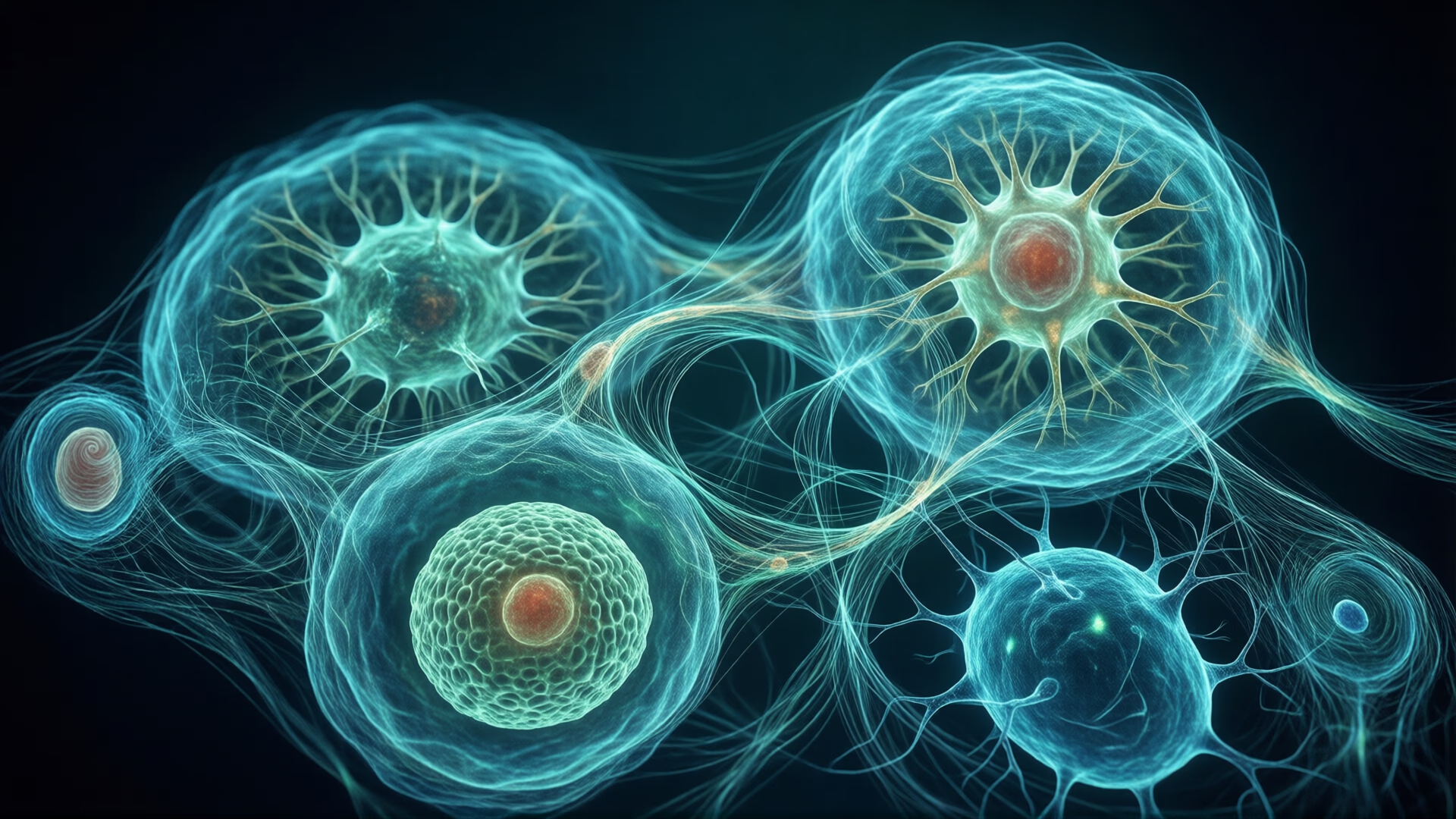
Cell Theory is a foundational principle in biology that provides insights into the nature and role of cells. It asserts that all living organisms are composed of one or more cells, which serve as the basic structural and functional units of life.
Key Concepts
Cell Theory encompasses three main principles:
- All Living Things Are Composed of Cells: Every organism, from single-celled bacteria to complex multicellular organisms like humans, is made up of cells.
- Cells Are the Basic Unit of Life: Cells are the smallest entities capable of performing all essential life processes independently.
- All Cells Arise from Pre-Existing Cells: This means that new cells are produced through cell division, either asexually (e.g., mitosis or binary fission) or sexually (meiosis).
This theory applies universally to both prokaryotic and eukaryotic cells, highlighting the unity of life at the cellular level. Examples range from unicellular organisms like Escherichia coli to specialized cells in multicellular organisms such as human skin cells or neurons.