Overview
The Golgi apparatus undergoes significant changes during cell division, such as disassembly or remodeling, distribution, and reformation. These transformations ensure proper segregation of cellular components between daughter cells.
Structure
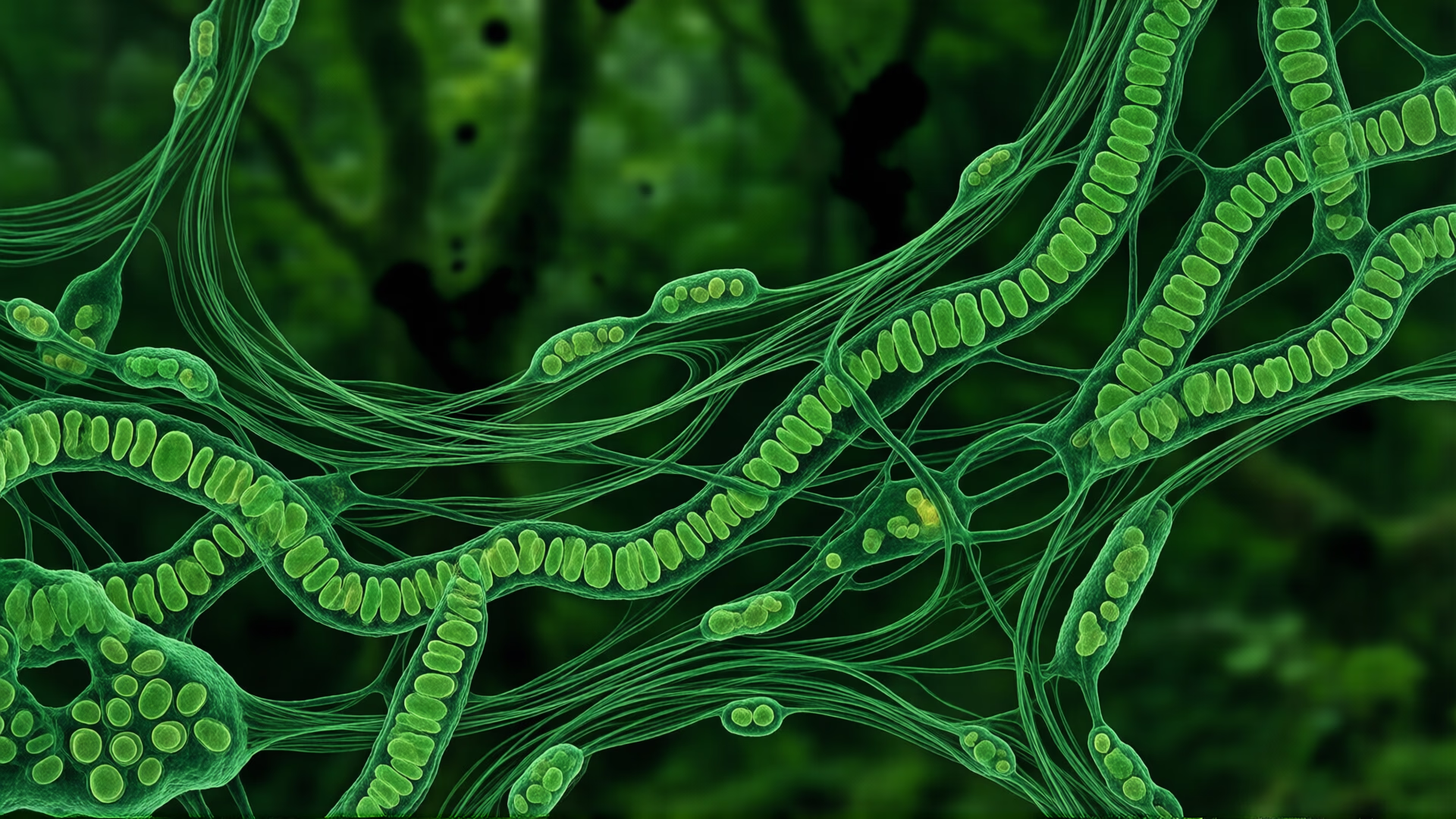
The Golgi Apparatus consists of stacked, flattened membrane sacs called cisternae (singular: cisterna). These cisternae are organized into three regions:
- Cis-Golgi network: Receives vesicles from the endoplasmic reticulum (ER).
- Medial-Golgi: The main site of protein and lipid modification.
- Trans-Golgi network: Prepares molecules for delivery to their final destinations.
The structure varies across species. In animal cells, it is typically located near the centrosome. In plants and fungi, it is dispersed as smaller stacks called dictyosomes.
Functions
Modification of Proteins and Lipids
The Golgi Apparatus modifies proteins and lipids through processes such as glycosylation, phosphorylation, and sulfation.
Sorting and Packaging
It directs molecules to lysosomes, the plasma membrane, or for secretion. This includes sorting hydrolases for lysosomes and enzymes tagged with mannose-6-phosphate.
Vesicle Formation and Transport
The Golgi produces vesicles for intracellular and extracellular transport. Different models describe this process, including cisternal maturation, vesicular transport, tubular networks, and hybrid approaches.
Polysaccharide Synthesis
In plants, the Golgi synthesizes polysaccharides like pectin and hemicellulose for cell wall construction.
Membrane Recycling
It regulates membrane composition by recycling components through vesicular trafficking.
History of Discovery
Discovered in 1898 by Camillo Golgi using a novel staining technique called the black reaction. Initially named "apparato reticolare interno," it was later renamed in his honor.
Location and Structure Details
- Animal Cells: A single Golgi apparatus near the centrosome.
- Plant Cells: Dispersed dictyosomes for cell wall biosynthesis.
- Fungal Cells: Small, dispersed stacks adapted to nutrient absorption.
- Protist Cells: Varying structures related to specific functions.
Enzymatic Zonation
The Golgi is divided into regions with distinct enzymatic activities, ensuring efficient processing of molecules.
Functions in Detail
- Protein and Lipid Modification: Includes glycosylation and phosphorylation.
- Vesicle Transport: Facilitates the movement of materials within the cell.
- Polysaccharide Synthesis: Essential for plant cell walls.
Interaction with Other Organelles
The Golgi interacts with:
- Endoplasmic Reticulum (ER): Receives proteins and lipids from the ER.
- Lysosomes: Sends enzymes for degradation processes.
- Plasma Membrane: Packages molecules for membrane incorporation or secretion.
- Mitochondria and Peroxisomes: Supplies required components indirectly.
Golgi Apparatus and Disease
Dysfunction in the Golgi is linked to various diseases:
- Neurodegenerative Diseases: Alzheimer’s and Parkinson’s involve Golgi fragmentation.
- Congenital Disorders: Congenital Disorders of Glycosylation (CDGs) result from enzyme mutations.
- Cancer: Altered function aids tumor progression.
- Metabolic Diseases: Affects lipid processing.
- Infectious Diseases: Pathogens exploit the Golgi for replication.
This comprehensive overview highlights the critical role of the Golgi Apparatus in cellular processes and its implications in various diseases.
Significance in Cell Division
The Golgi's role is vital for proper segregation of cellular components, ensuring daughter cells inherit necessary organelles and cytoplasmic content.
Research and Progress
Recent research focuses on understanding Golgi remodeling mechanisms, highlighting areas where further study is needed.
Overview
The Golgi apparatus undergoes significant changes during cell division, such as disassembly or remodeling, distribution, and reformation. These transformations ensure proper segregation of cellular components between daughter cells.
Key Concepts
The Golgi apparatus is a stack of flattened membrane sacs involved in modifying, sorting, and packaging molecules. Its metabolism changes dynamically during cell division to facilitate redistribution of components.
Structure and Function
During cell division, the Golgi's structure remodels to ensure proper segregation. This involves dynamic changes that maintain cellular integrity in daughter cells.
Metabolism
The Golgi's metabolism includes processes enabling its disassembly or remodeling, coordinated with other cellular events like organelle distribution.
[1]: Golgi Apparatus - Definition, Structure, Function [2]: Membrane and organelle dynamics during cell division - PubMed