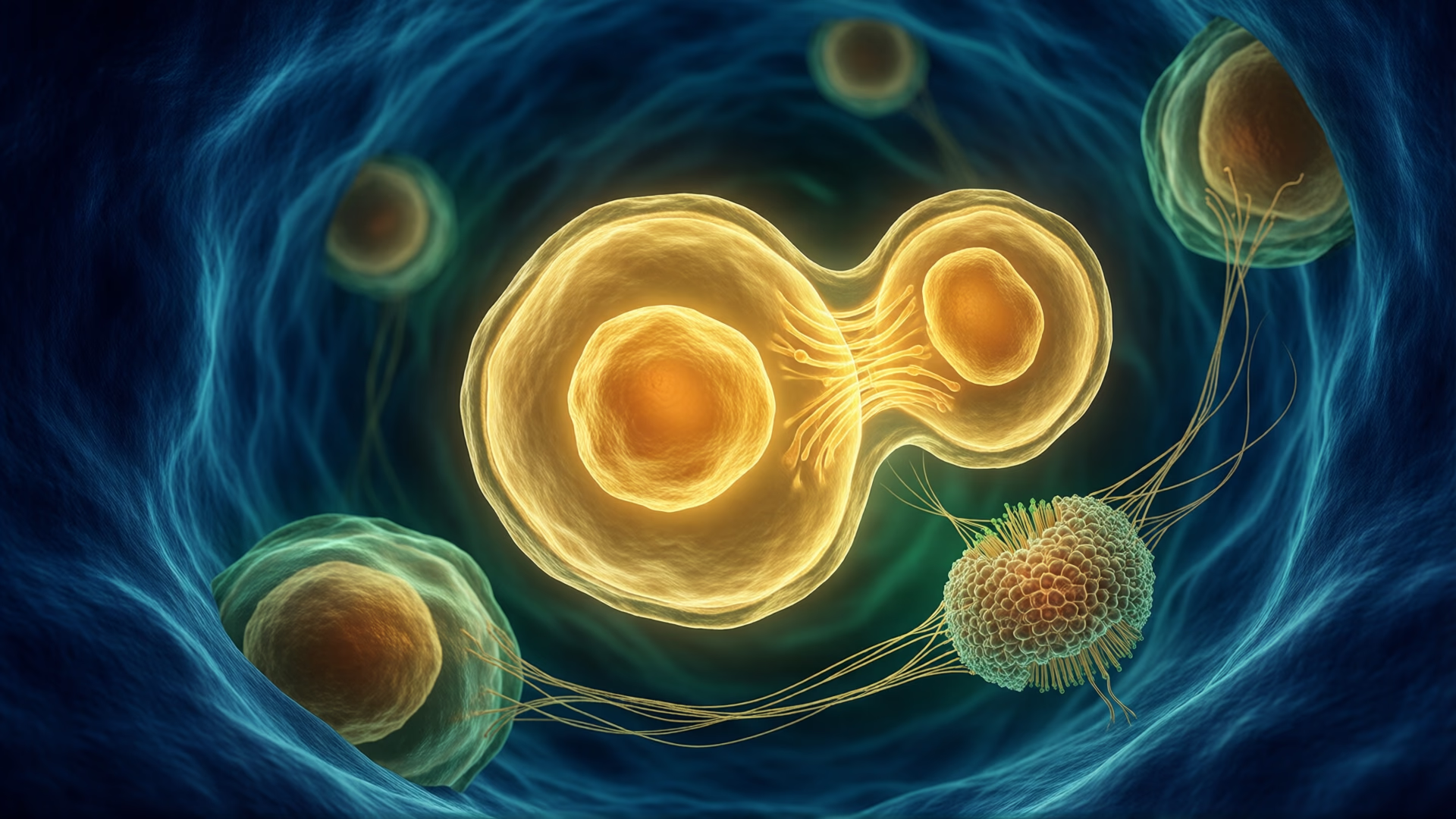
Lysosomes
Overview
Lysosomes are specialized cellular structures that function as "digestive compartments," degrading complex molecules using hydrolytic enzymes. Discovered by Christian de Duve in 1955 and studied structurally by Novikoff in 1956, lysosomes play a crucial role in various cellular processes.
History
Lysosomes were first identified by Christian de Duve in 1955 through electron microscopy studies. The detailed structure of lysosomes was later examined by Albert Claude and George E. Palade in the same year, with morphological studies conducted by Novikoff in 1956.
Structure
Lysosomes are spherical organelles ranging from 0.1-0.5 µm to 1.2 µm in size. They are enclosed by a single membrane that protects hydrolytic enzymes and maintains an acidic environment (pH ~5.0) using proton pumps.
Types
Lysosomes can be categorized into four types:
- Primary lysosomes: Enzyme precursors processed from the endoplasmic reticulum.
- Secondary lysosomes (Heterophagosome): Form after fusing with vesicles containing ingested material.
- Tertiary lysosomes (Residual bodies): Store undigested materials, such as Lipofuschin pigment granules.
- Autolysosomes: Involved in autophagy by digesting cellular debris.
Location
Lysosomes are prevalent in most eukaryotic cells, except specific fungi, protists, plants (meristematic cells), and mature mammalian red blood cells.
Formation
They originate from the endoplasmic reticulum and Golgi apparatus. Primary lysosomes form via budding from the Golgi body as vesicles, which fuse with cytoplasmic vesicles to create secondary lysosomes.
Hydrolytic Enzymes
Lysosomes contain enzymes like phosphatases (acid-phosphatase), nucleases (ribonuclease), polysaccharide enzymes (β-galactosidase), proteases (collagenase), and lipases (esterase).
Functions
- Intracellular digestion: Breaks down ingested material via endocytosis.
- Extracellular digestion: Releases enzymes externally for digestion.
- Phagolysosome formation: Combines with phagosomes to destroy pathogens.
- Autophagy: Removes damaged cellular components through autolysis.
This structured approach provides a comprehensive understanding of lysosomes, highlighting their discovery, structure, types, location, formation, enzyme composition, and essential functions within the cell.
Regulation
- TOR Signaling: Inhibits microautophagy via ESCRT-0 under nutrient-rich conditions. - mTOR Pathway: Activated by amino acids and growth factors, promoting autophagy when inhibited.
Technological Tools
- Fluorescent-based assays: Evaluate CMA and microautophagy activity in cells. - In vitro models: Useful for studying lysosomal functions and autophagic processes.
Diseases and Applications
- Lysosomal Storage Diseases: Characterized by impaired lysosomal function, leading to undigested material accumulation. Autophagy dysregulation is common in these conditions.
Key Concepts
Lysosomes receive proteins synthesized by the Rough Endoplasmic Reticulum (RER). These proteins are crucial for lysosomal functions, including breaking down macromolecules and cellular debris. The ER's role in producing these proteins highlights its integral connection to lysosome activity.
Mechanisms and Processes
- Microautophagy: Involves lysosomal engulfment of small cytoplasmic regions or organelles. Key players include the ESCRT complex and TORC1. - Chaperone-mediated Autophagy (CMA): Targets proteins with the KFERQ motif using Hsc70 chaperones for lysosomal delivery.
Role in Signaling Cascades
Lysosomes play a crucial role in the regulation of signaling pathways through receptor downregulation. When extracellular signals bind to cell surface receptors, these receptors can be internalized via endocytosis. Once inside the cell, the receptors are directed to lysosomes where they undergo degradation. This process is essential for terminating the signaling cascade and preventing prolonged activation of cellular responses.
Receptor Downregulation
Receptor downregulation by lysosomes involves the following steps:
- Endocytosis: The receptor is taken into the cell as part of a vesicle.
- Fusion with Lysosome: The vesicle fuses with a lysosome, exposing the receptor to digestive enzymes.
- Degradation: The receptor is broken down into smaller components, which are either recycled or expelled from the cell.
Role in Apoptosis
Lysosomes are closely linked to apoptosis through mechanisms like lysosomal membrane permeabilization (LMP), which leads to the release of lysosomal contents into the cytosol. Enzymes like cathepsin B can activate pro-apoptotic proteins, such as Bid, triggering downstream signaling pathways that result in mitochondrial damage and the release of cytochrome c.
Lysosomal Membrane Permeabilization
LMP is a critical mechanism by which lysosomes contribute to apoptosis. Triggers include oxidative stress, direct damage, or signaling pathways. The process involves disrupting proteins and lipids in the membrane, allowing enzyme release.
Interaction with Other Organelles
Lysosomes interact with mitochondria and the endoplasmic reticulum. For example, calcium ions from lysosomes can be taken up by mitochondria, leading to pro-apoptotic factor release.
Dysfunction and Disease
Lysosomal dysfunction links to neurodegenerative disorders, cancer, and lysosomal storage diseases. Deficiencies or mutations cause material accumulation.
Therapeutic Implications
Targeting lysosomes offers therapies for diseases through enzyme replacement, substrate reduction, and apoptosis sensitization strategies.
Structure and Function
Lysosomes are characterized by their single membrane, which is impermeable to the enzymes it contains. This barrier prevents enzyme leakage into the cytosol under normal conditions. The lysosomal membrane is composed of specific proteins and lipids that maintain this exclusivity. Over 60 different enzymes, such as cathepsins, reside within lysosomes, enabling them to perform their digestive functions.
Key Concepts
Lysosomes receive proteins synthesized by the Rough Endoplasmic Reticulum (RER). These proteins are crucial for lysosomal functions, including breaking down macromolecules and cellular debris. The ER's role in producing these proteins highlights its integral connection to lysosome activity.
Function
- Protein Synthesis: Proteins destined for lysosomes are synthesized on the Rough Endoplasmic Reticulum (RER). These proteins are then transported to the Golgi apparatus before being directed to the lysosomes. - Role in Cellular Breakdown: Lysosomes use these proteins to degrade macromolecules, such as carbohydrates, lipids, and proteins, contributing to the cell's recycling process.
Clinical Relevance
The source text notes that ER dysfunction can lead to various diseases, including neurodegenerative disorders. This dysfunction may indirectly affect lysosome activity, potentially impairing cellular breakdown processes and leading to disease states.
[1]: What are Lysosomes? Definition, Types, Structure & Functions - Biology ... [2]: Lysosome biology in autophagy - PMC [3]: 7.1: General Principles of Signaling - Biology LibreTexts [4]: Lysosomes in Apoptosis: A Comprehensive Guide [5]: Endoplasmic Reticulum (ER) - Definition, Structure, Function