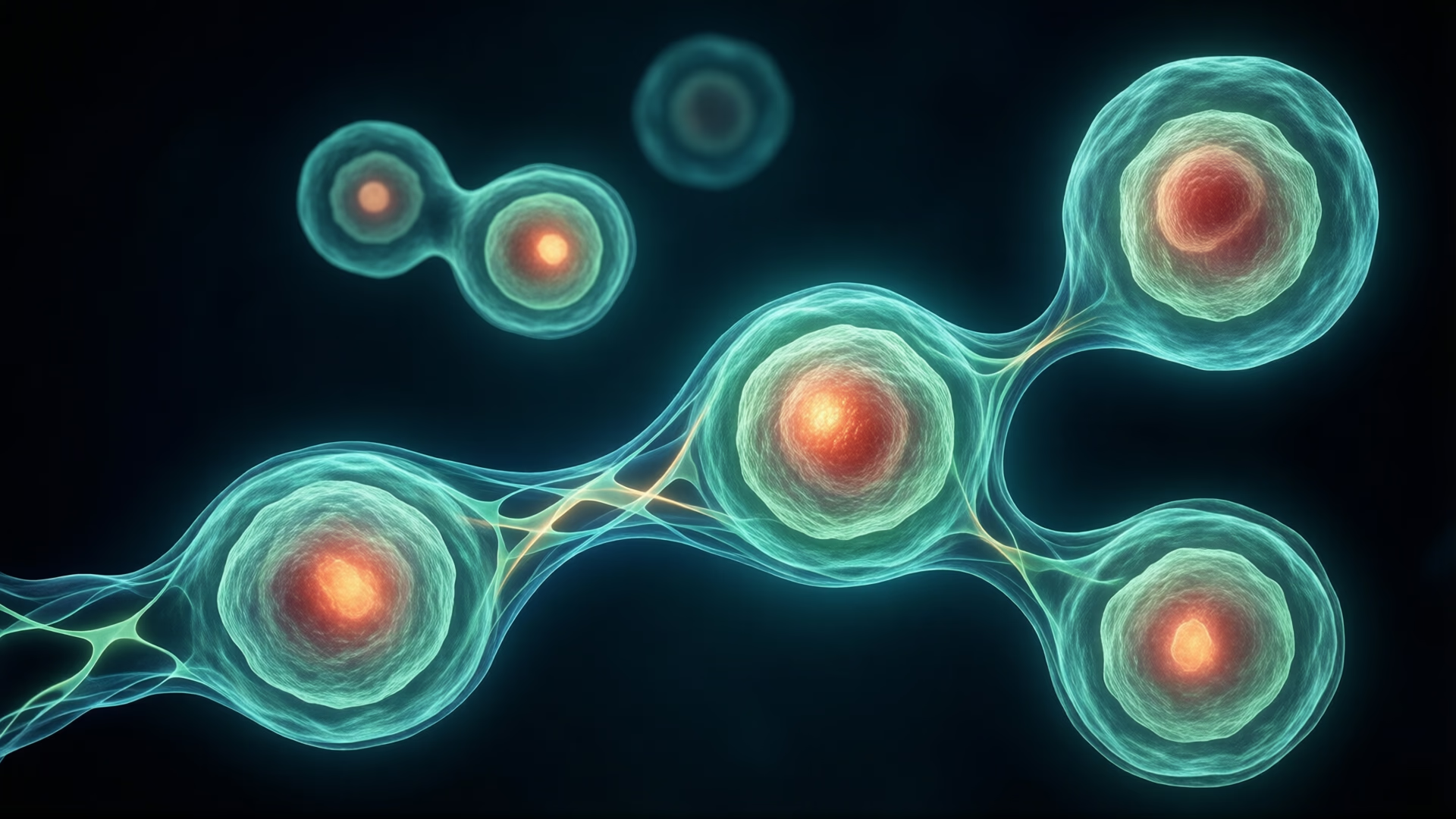
Stem Cells
Overview
Stem cells are unique cells with remarkable regenerative potential, capable of renewing themselves and differentiating into various specialized cell types. They play a crucial role in early development and tissue repair throughout life.
History
The study of stem cells advanced significantly with the derivation of human embryonic stem cells (hESCs) from the inner cell mass of preimplantation embryos in 1998. A major breakthrough came in 2006 with the discovery of induced pluripotent stem cells (iPSCs), reprogrammed from mature adult cells.
Key Concepts
Stem cells are categorized into two main types:
- Pluripotent Stem Cells: These include hESCs and iPSCs, capable of differentiating into all cell types found in the adult body.
- Adult (Somatic) Stem Cells: Found in specific tissues, they differentiate into specialized cell types within those tissues.
These cells exhibit self-renewal, allowing them to divide multiple times and produce either more stem cells or differentiated cells. Understanding these properties is vital for exploring their roles in development, aging, and disease.
Autocrine Signaling
Autocrine signaling involves a cell releasing signaling molecules that bind to its own receptors, influencing processes like growth, differentiation, and apoptosis. This mechanism is crucial for maintaining stem cell populations and guiding their differentiation into specialized cells during development.
Paracrine Signaling
Paracrine signaling allows cells to influence neighboring cells, often through localized factors such as growth factors and cytokines. Morphogens, which function via paracrine signaling, create concentration gradients that dictate cell fate, essential for stem cell differentiation into specific tissue types during development.
Juxtacrine Signaling
Juxtacrine signaling requires direct contact between adjacent cells, often through membrane-bound proteins like the Notch pathway. This mechanism is vital in developmental processes and tissue homeostasis, influencing stem cell self-renewal and differentiation by regulating gene expression.
Culturing Methods
In the laboratory, stem cells are cultured in nutrient-rich medium, attaching and dividing on surfaces before requiring re-plating. They can be frozen for storage and transportation. Reprogramming adult cells into iPSCs involves introducing master regulators of pluripotency. Differentiation is achieved by altering culture conditions or gene expression.
Applications in Biomedical Research and Therapy
Stem cells are pivotal in understanding human biology and developing therapies. iPSCs enable disease modeling and drug testing, while applications include generating tissues and organs for transplantation. Challenges such as immune rejection and long-term functionality are being addressed. Currently, only FDA-approved treatments like blood-forming stem cells from cord blood are available.
Applications
Understanding these signaling mechanisms has profound implications for regenerative medicine. Manipulating paracrine pathways can enhance tissue regeneration using biomaterials that mimic natural matrices, potentially harnessing the power of stem cells to repair or replace damaged tissues. This research opens avenues for developing targeted therapies in oncology and regenerative medicine.
Research Support
The NIH supports stem cell research through funding under the NIH Guidelines for Human Stem Cell Research. The Regenerative Medicine Innovation Project specifically focuses on adult stem cells and iPSCs, advancing both basic and clinical applications.
[1]: Stem Cell Basics | STEM Cell Information [2]: Understanding the Types of Cell Signaling Mechanisms